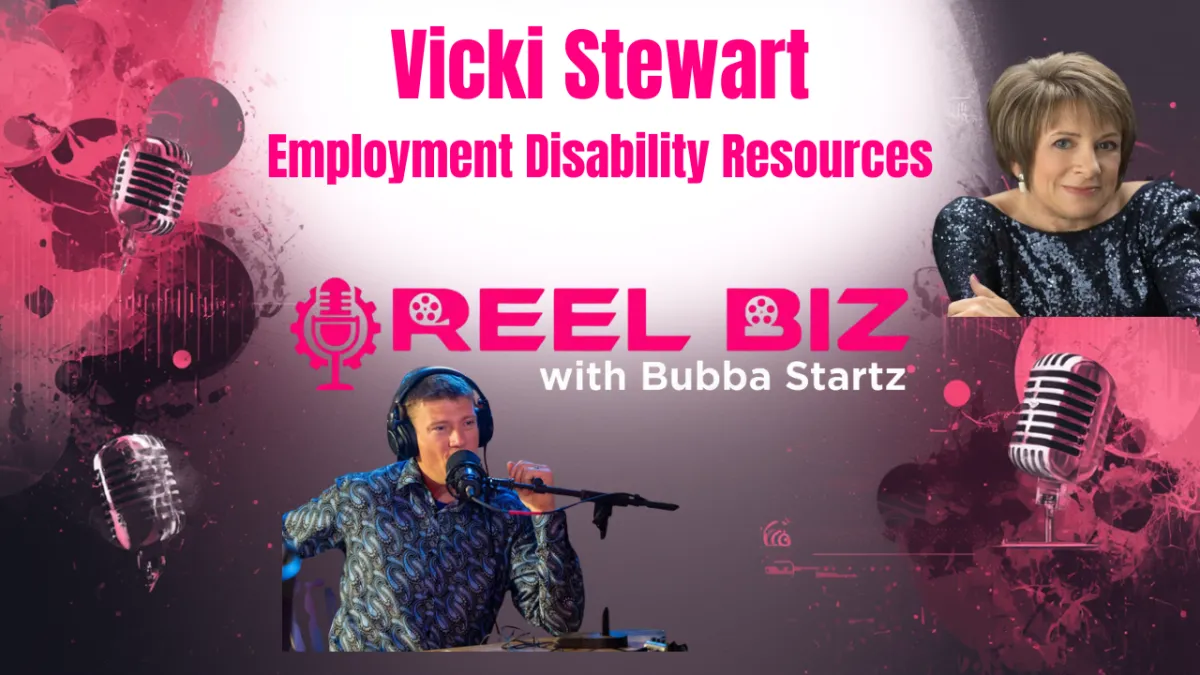
Breaking Barriers: Vicki Stewart on Disability Inclusion and Workforce Opportunities in South Dakota
Employment Disability Resources: Vicki Stewart on Building More Inclusive Workplaces in South Dakota
Vicki Stewart of Employment Disability Resources joins REEL BIZ to discuss disability inclusion, workplace accommodations, accessibility, and how South Dakota employers can build stronger teams.
Creating a workplace where every qualified person has the opportunity to contribute is not just good business—it is good community leadership. On a recent episode of REEL BIZ, host Bubba Startz sat down with Vicki Stewart, Executive Director of Employment Disability Resources, to discuss how education, communication, accessibility, and employer support can help open more doors for people with disabilities.
Watch the complete interview with Vicki Stewart on YouTube or listen through The Scene Projects Podcast AI episode page.
Employment Disability Resources, a South Dakota nonprofit established in 2010, works directly with employers to promote the employment of people with disabilities. The organization provides disability awareness education, workplace resources, accommodation guidance, and connections to community partners that can help businesses and job seekers find the right fit.
For Stewart, this work is more than a professional calling. It is deeply personal.
Vicki Stewart’s Lived Experience Drives Her Mission
Vicki Stewart was born with osteogenesis imperfecta, commonly known as brittle bone disease. She shared that she has experienced approximately 45 broken bones throughout her lifetime and has used a wheelchair all her life.
As the youngest of six children—and the only one in her family with the disability—Stewart learned early that inclusion, community support, and opportunity can shape a person’s confidence and independence.
She attended public school from kindergarten through high school, supported by family, friends, and her small-town community. Later, she attended Augustana University, lived on campus for all four years, and navigated the challenges of independent living away from home.
That experience helped form the foundation of the work she leads today.
Stewart’s passion is centered on making life more inclusive for people with disabilities—not only in employment, but also in transportation, independent living, volunteering, and community participation.
As she explained during the REEL BIZ conversation, isolation can have real consequences. When people are excluded from community spaces, workplaces, and everyday opportunities, it can contribute to loneliness, depression, and disconnection. Inclusion is not simply a policy conversation. It is about people having the ability to participate fully in life.
What Employment Disability Resources Does for Employers
Employment Disability Resources was formed after a group of businesses recognized that there was an untapped pool of qualified talent: people with disabilities who could fill open positions and contribute meaningful skills to the workforce.
Since becoming Executive Director in 2016, Stewart has worked to expand awareness and help employers better understand what disability inclusion can look like in practice.
The organization supports employers through:
Disability awareness and education
Disability etiquette training
Guidance on workplace accommodations
Employer consultations
Assistance connecting businesses with community resources
Support for HR professionals navigating accommodation requests
Accessibility information, including ADA-related questions
Training opportunities and community conversations about disability employment
The goal is not to force a one-size-fits-all process. It is to help employers understand their options, identify practical solutions, and see the person’s talents before focusing on perceived limitations.
As Stewart put it, “We don’t know what we don’t know.”
That simple statement matters. Many business owners, managers, and HR professionals are not intentionally excluding people with disabilities. Often, they are unsure what to say, worried about doing the wrong thing, or uncertain how to handle accommodations. Education can replace discomfort with confidence.
Looking Beyond Disability to See Skills and Strengths
One of the biggest challenges in disability employment is the tendency to focus first on what someone cannot do rather than what they can do.
Stewart encourages employers to look at a candidate’s skills, experience, reliability, perspective, and potential. A disability may be visible, or it may be invisible. Either way, it should not overshadow the person’s qualifications.
Not every candidate is the right fit for every job. That is true for every job seeker, with or without a disability. The real question for employers is whether a qualified person can perform the essential functions of the job with reasonable, practical support.
Employment Disability Resources can help businesses have that conversation from the beginning. Stewart often starts by asking employers where they are now:
Have they previously hired an employee with a disability?
Do they need broad education about disability inclusion?
Would their team benefit from disability etiquette training?
Are there specific barriers or concerns they need help addressing?
Do they need to connect with vocational rehabilitation or other employment resources?
This approach keeps the process grounded, respectful, and specific to the needs of each business.
The Truth About Workplace Accommodations
A common misconception is that hiring or retaining an employee with a disability will be too expensive. Stewart emphasized that this is frequently not the case.
Many accommodations cost nothing at all. When there is a cost, it is often modest. Flexible scheduling, for example, is one of the most commonly requested accommodations for both employees with disabilities and employees without disabilities.
That is an important point: accommodations often benefit more people than employers may realize.
A flexible schedule can support someone managing a medical condition, but it can also help a working parent, a caregiver, an employee attending school, or a team member dealing with transportation challenges. A door opener may assist a wheelchair user, but it also helps someone carrying supplies, pushing a stroller, or using a walker. A curb cut improves accessibility for people with mobility disabilities while also benefiting parents, cyclists, delivery workers, and older adults.
Inclusive design is better design because it considers real people and real-world situations.
For businesses, there is also a practical bottom-line consideration. Stewart noted that employers frequently find employees with disabilities to be dependable, loyal, and committed. Reducing turnover and retaining strong employees can provide value far beyond the cost of a simple accommodation.
Supporting Employees After They Are Hired
Disability inclusion does not end with the hiring process.
Employees’ needs can change over time. Some disabilities are degenerative. Others may be affected by illness, injury, aging, changing treatment plans, or new challenges outside of work. Employers may find themselves needing guidance after an employee is already part of the team.
That is another area where Employment Disability Resources can help.
Stewart works closely with HR professionals because they are often the first people to receive accommodation requests. But she also encourages businesses to reach out at any point when questions, barriers, or concerns arise.
In some cases, that may mean facilitating an open conversation between the employer and employee. In others, it may mean brainstorming new accommodations, exploring assistive technology, or identifying ways to make a schedule or workspace more workable.
The important thing is communication.
Too often, employers avoid a necessary conversation because they are concerned about using the wrong words. Stewart’s work helps make those conversations less intimidating and more productive. A respectful, direct discussion can help both the employer and employee identify solutions that support performance and preserve a valuable working relationship.
Disability Employment Awareness in South Dakota
Employment Disability Resources is active in bringing the conversation about disability employment to businesses throughout South Dakota.
October is National Disability Employment Awareness Month, and the organization uses that period to provide educational opportunities, awareness initiatives, and events for employers and community members.
Stewart also discussed efforts such as a billboard campaign featuring employees with disabilities and their employers. These stories are important because representation matters. Seeing people with disabilities in visible, meaningful roles helps challenge outdated assumptions about leadership, capability, and workplace contribution.
Employment Disability Resources is also involved in the WIN in Workforce Summit and is working to share a video that explains the organization’s mission and how it can serve South Dakota businesses.
Another resource is the organization’s West Meets East virtual training series. Held monthly, the half-hour sessions bring together professionals from both sides of the state for education and conversation on disability-related employment issues. Topics can include conditions such as post-traumatic stress disorder, potential workplace barriers, and accommodations that may support employees.
The virtual format is especially useful in a geographically large state like South Dakota, where major population centers can be hundreds of miles apart. Technology gives employers, HR professionals, and community partners the chance to learn from one another without needing to travel across the state.
Accessibility Benefits Everyone
Stewart also highlighted the importance of the Americans with Disabilities Act and the continued need for accessible businesses and communities.
Accessibility can include everything from parking areas and entrances to ramps, door openers, interior layouts, and communication practices. Businesses with questions about improving accessibility can reach out to Employment Disability Resources for information and guidance.
In historic communities, accessibility improvements can require thoughtful planning. Older buildings may have architectural or preservation considerations that make upgrades more complex. Still, the underlying goal remains the same: create environments that are safer, more welcoming, and more usable for everyone.
Stewart’s message is clear: if people see an accessibility issue, they should bring it forward.
Awareness is often the first step toward improvement. A barrier cannot be addressed if no one is willing to acknowledge it.
Why Representation and Inclusion Matter
Stewart’s leadership as a woman with a disability in an executive role carries a powerful message for job seekers and employers alike.
People with disabilities deserve to see themselves represented in leadership, business, education, public life, and every other area of the community. Representation communicates possibility. It tells a young person, a job seeker, or someone adjusting to a newly acquired disability that their ambitions are still within reach.
The conversation on REEL BIZ was not only about employment statistics or legal compliance. It was about changing the culture around disability.
It is about employers recognizing talent.
It is about employees feeling safe enough to communicate what they need.
It is about businesses understanding that accommodations are often practical, affordable, and beneficial.
And it is about communities deciding that participation should not be reserved for only some people.
Learn More About Employment Disability Resources
To learn more about Employment Disability Resources, available employer support, training opportunities, and disability inclusion resources, visit EDRSD.org.
You can also find Employment Disability Resources on Facebook and LinkedIn by searching for the organization’s name. Stewart shared that businesses and professionals can contact her directly and can request to join the organization’s monthly email newsletter for updates and resources.
For more business conversations, nonprofit stories, entrepreneurial insight, and community voices, visit REEL BIZ and subscribe to the REEL BIZ with Bubba Startz YouTube channel.
Watch the full conversation with Vicki Stewart on YouTube or listen to the episode via The Scene Projects Podcast AI.
Similar Conversations :
https://thesceneprojects.com/post/lisa-hall-glory-girl-productions-the-addicts-wake
https://thesceneprojects.com/post/guest-podcasting-seo-brandon-leibowitz


