
Why Travel Planning Is Really About Understanding People
Why Planning Travel Is Really About Understanding People
By Luciana Janson, Contributing Editor — REEL BIZ Travel
Editor's note: REEL BIZ Travel is going global. Our newest contributing editor, Luciana Janson, writes from São Paulo, where she runs Zest Estúdio de Viagens de Luxo, a personalized luxury travel studio and independent affiliate of Primetour, a member of the Virtuoso global luxury travel network. A former translator turned travel advisor, Luciana brings a perspective you won't find in a listicle: what travelers mean when they tell you where they want to go. Welcome, Luciana.
A Brazilian traveler planning a two-week holiday in Europe might come to me with what seems like a perfectly reasonable request: Paris, London, Rome, Florence, perhaps a few days in Switzerland, a couple of museums, excellent restaurants, some shopping, and enough free time to relax and enjoy the atmosphere.
Naturally, they don't want to feel rushed.
I can hardly blame them. When you live in Brazil, a trip to Europe is a fairly serious undertaking. There's the long flight, the expense, the arrangements involved in being away from home for two weeks. After all that, the temptation to squeeze in one more city is understandable. And then another, because it's practically next door. (At least that's how it looks on Google Maps.)
I've discovered that talking someone out of visiting another city can be surprisingly difficult. People get attached to their plans, even the impossible ones.
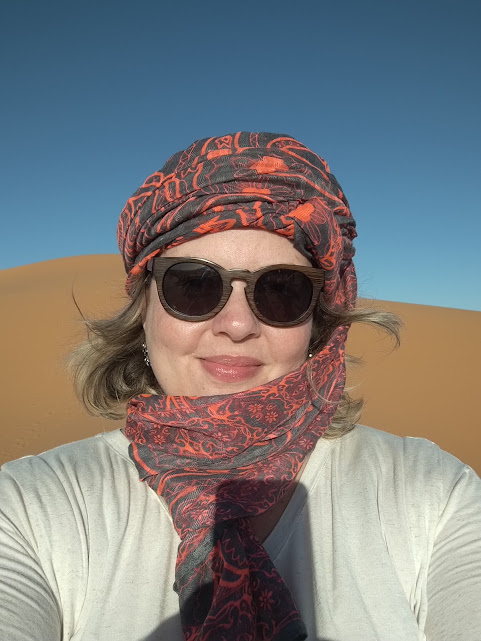
From Translator to Travel Advisor
I should probably mention that I wasn't always in the travel business. I studied Languages and Translation and spent years working in a profession that changed enormously along the way. Technology transformed the industry, and the value placed on translation seemed to shrink considerably. At some point, I began wondering whether it was time to do something else.
Travel had always been somewhere in the back of my mind. When I was younger, I actually dreamed of working at an airport. I thought it was terribly glamorous, all those people coming and going, planes taking off, the excitement of international travel. Of course, I now have a slightly more realistic idea of what airport staff deal with every day. My younger self probably didn't give much thought to delayed flights, missed connections, or angry passengers.
And I also had this idea in my mind of writing about travel, although nothing ever came of it.
So, in 2024, I finally made the move into tourism. It wasn't entirely planned, and I certainly had a lot to learn. But when I started Zest, my travel consultancy in São Paulo, I discovered that some of my old skills were surprisingly useful in my new profession.
Lost in Translation: What "Authentic" Really Means
Translation teaches you to pay attention to what people mean, which isn't always quite the same as what they say. A sentence can be perfectly translated, word for word, and still sound completely wrong in another language. You have to understand the circumstances, the cultural references, even the person speaking.
I run into something similar with travel. Take the word authentic, for example. Everybody seems to want authentic experiences these days, but the definition varies enormously. For one person, it means eating at a tiny restaurant where the menu is handwritten and nobody speaks English. For another, it's a private museum visit with an art historian. Someone else might simply want to stay in a hotel that feels connected to its surroundings rather than one that could be anywhere in the world. All perfectly valid interpretations. And all likely to produce rather different itineraries.
It didn't take long to realize how useful those old skills would be. Listening, interpreting, asking for clarification. Occasionally, diplomatically explaining that something which sounds wonderful in theory might be considerably less enjoyable in practice.
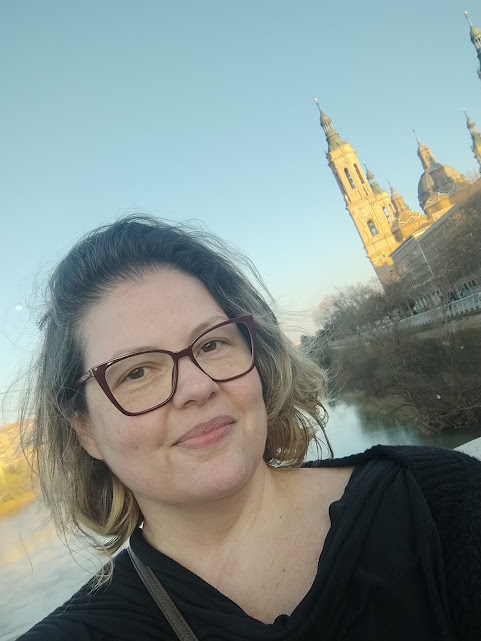
Three Countries in Ten Days? The Brazilian Way to Travel
Now, working with Brazilians is a story of its own. We have a rather peculiar relationship with distance. Our country is so large that a four-hour domestic flight barely raises an eyebrow. A journey that might take you across several European borders could still leave you in the same Brazilian state. We're used to spending time getting somewhere, and perhaps that explains our determination to make the most of a trip once we've arrived. Three countries in ten days? Why not? Four, if the train connections are good.
Then there's the Brazilian family holiday, an exercise in negotiation that would challenge a seasoned diplomat. Imagine three generations traveling together. The grandparents would like a comfortable pace, although they may have no intention of missing a single attraction. The parents want culture, restaurants, and a little time to themselves. The children have strong opinions about theme parks. Someone has been researching shopping opportunities for months. And everybody agrees that the trip should be relaxing. (The trick is discovering what each person is willing to compromise on, preferably before the reservations become non-refundable.)
Of course, I'm exaggerating a little. I've met wonderfully relaxed Brazilian travelers, just as I'm sure there are Europeans who insist on seeing every monument before breakfast. Still, certain habits are familiar enough to make me smile.
We can be meticulous planners and enthusiastic improvisers, sometimes within the same afternoon. A restaurant reserved weeks in advance suddenly competes with a place someone discovered while walking around. A carefully arranged free morning becomes an opportunity to visit another museum. And the suggestion of spending an entire afternoon doing nothing can be received with mild suspicion.
"Nothing? Really? Not even a little sightseeing?"
Social Media, Bucket Lists, and the Eiffel Tower Question
Social media has complicated matters further. It's now possible to arrive in a city with an astonishingly long list of restaurants, exhibitions, shops, viewpoints, and "secret" places to visit. Some of these recommendations are excellent; others have become so popular that the queue outside is longer than the actual experience.
I have nothing against famous attractions. If someone has dreamed of seeing the Eiffel Tower since childhood, I'd never suggest skipping it simply because it's crowded; that would be absurd. But I do wonder how much of what we put on our travel wish lists comes from genuine curiosity and how much comes from the feeling that we ought to see something because everyone else has.
Rethinking Luxury Travel
And then there's luxury, a word we use rather generously in the travel industry. Don't get me wrong, I love a beautiful hotel and impeccable service. But I've seen enough to know that the most expensive option isn't always the right one.
A family traveling with small children may appreciate a spacious suite and a convenient location far more than a spectacular hotel on the other side of town. A couple celebrating an anniversary might prefer a quiet dinner in a neighborhood restaurant to the elaborate tasting menu everyone is talking about. And someone who spends their working life rushing between appointments may be delighted to discover that their holiday contains a few hours with absolutely nothing scheduled.
I have my own ideas about luxury, of course. But they're not necessarily yours.
October 12th and the Many Meanings of a Holiday
Being Brazilian probably has something to do with the way I approach all this. After all, we're a country where you can travel for hours and still be surrounded by people speaking Portuguese, although the accents, food, and local customs may have changed completely.
Consider October 12th, one of our national holidays. Brazil celebrates Our Lady of Aparecida, the country's patron saint, on the same day as Children's Day. (It's a combination that may sound unusual to someone unfamiliar with Brazil.) Hundreds of thousands of pilgrims visit the National Shrine of Aparecida, one of the world's largest Catholic churches, while elsewhere families are making entirely different plans. Some head to the beach, others to countryside hotels or theme parks. Children anticipate presents, parents negotiate holiday arrangements, and the highways fill with people who have all decided, with impeccable timing, to leave the city. Depending on the year, the holiday might fall on a weekday that allows for an extended weekend, making the whole operation even more ambitious.
Perhaps that's one reason I'm cautious about making assumptions when someone tells me where they want to go. A destination can mean very different things to different travelers. Japan might be a long-held dream for someone fascinated by its history and traditions. For another person, the excitement lies in contemporary Tokyo, technology, food, or theme parks. Both may have been saving for years to make the journey, but it would be a mistake to plan the same trip for them.
A couple may agree enthusiastically on Italy, only for me to discover that one imagines long lunches in Tuscany while the other is thinking about museums in Rome. They both say they want to explore the country. We just need to establish whether they're picturing the same kind of exploration.
The Questions Behind Every Great Itinerary
Before I book anything, I ask a lot of questions. Probably too many, according to some people. I want to know how people usually travel, what they've loved or disliked in the past, whether they prefer busy mornings or slow starts, and how much independence they enjoy having once they're away.
There are practical questions, naturally. Budgets, accessibility, room configurations, transport, opening hours, and the endless little details that make a complicated itinerary work. I spend a considerable amount of time researching things that most travelers will never have to think about. Ideally, they won't even know there was a problem to solve.
And yes, I spend plenty of time looking at beautiful hotels and interesting destinations, which is every bit as enjoyable as it sounds. But I also spend time comparing train connections, checking whether a hotel really has an elevator, and making sure that an ambitious day of sightseeing leaves someone enough time to have lunch.
I'm also constantly learning. From local guides who know their cities better than any guidebook could, from hotel teams who understand the small details of hospitality, and from travelers whose interests introduce me to subjects I might never have explored otherwise.
More Maps, Fewer Dictionaries
I came into this profession relatively recently, and there's still an enormous amount I want to learn. And now, rather unexpectedly, I find myself writing about travel, something I had wanted to do long before I ever considered becoming a travel advisor. Funny how things work out.
There are plenty of excellent articles telling people where to go, which hotels to book, and what to see. I'd like to explore some of the things that don't always make it into those guides: the peculiarities of travel behavior, cultural differences, the occasional absurdity of planning a holiday, and the stories that emerge when people leave their usual surroundings.
I'll probably write about Brazil from time to time, and about the destinations, people, and traditions I encounter through my work. There may be a few opinions about hotels, a little behind-the-scenes travel planning, and, inevitably, some observations about my fellow Brazilians.
I still think about translation quite often. These days, the conversations involve fewer dictionaries and considerably more maps.
And I continue to remind people, whenever necessary, that Europe will still be there next year.
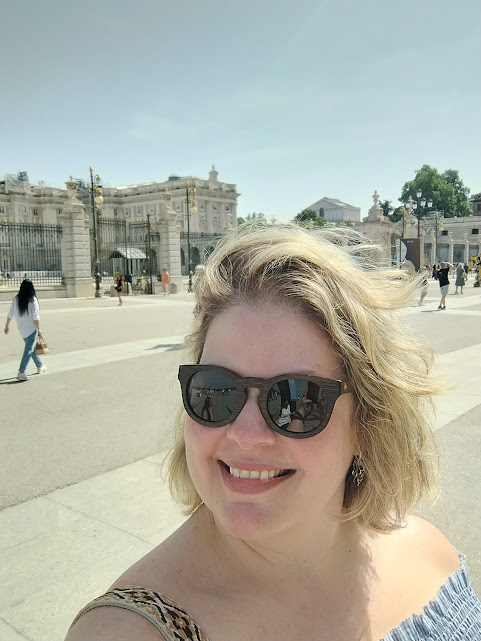
About Luciana Janson and Zest
Luciana Janson is the founder of Zest Estúdio de Viagens de Luxo, a São Paulo–based studio that designs personalized luxury travel. Zest offers two ways to work together: Viagem 360º, a full-service option covering bookings, logistics, and an itinerary app, and a stand-alone itinerary consultancy delivered as a detailed travel plan. Every trip starts the way this essay suggests it should — with a conversation about how you actually like to travel.
Zest operates as an independent affiliate of Primetour, a member of the Virtuoso network of luxury travel agencies, giving clients access to preferred hotel partners and on-the-ground experiences not available to the general public.
Website: zest-vip.com.br
Blog (Portuguese): Zest travel blog
Instagram: @zest.viagens.personalizadas
WhatsApp: +55 (11) 5128-2510
Email: [email protected]
Start planning: Contact Zest

More From REEL BIZ Travel
Luciana joins REEL BIZ Travel as the pillar expands worldwide, alongside our first REEL BIZ Travel feature on the Sturgis Buffalo Chip. Our rule hasn't changed: we cover places and people we'd trust with our own trips, and we tell you what's actually worth your money.
Watch REEL BIZ on the REEL BIZ YouTube channel, listen on Apple Podcasts, and explore every pillar — Travel, Food & Drink, Gift Guide, and our founder and creator interviews — at rblifestyle.thesceneprojects.com
Are you a travel advisor, hotelier, or destination brand with a story worth telling? REEL BIZ Travel is looking for international contributors and partners. Reach out through reelbiz.thesceneprojects.com.