Master PGA Instructor John Hughes on Instant Golf Improvement | The Scratch Project
Master PGA Instructor John Hughes Talks Instant Golf Improvement on The Scratch Project
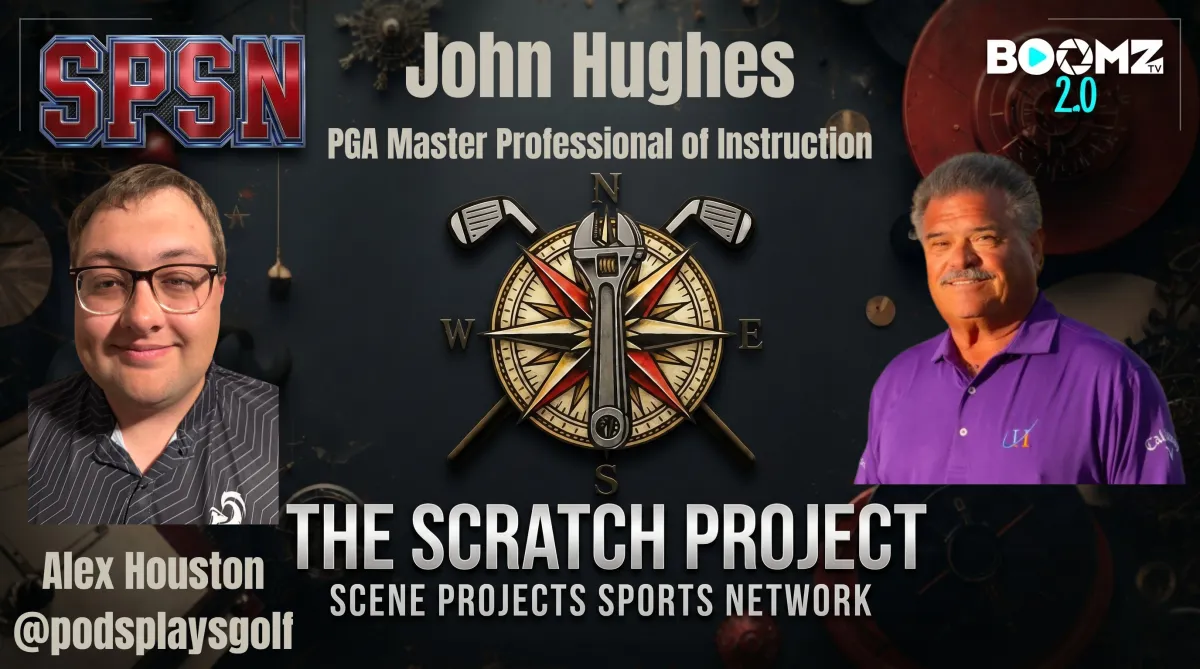
The latest episode of The Scratch Project, hosted by Alex Houston of PodsPlaysGolf and presented by Skunk Golf Company ("Look good even if your game stinks"), delivered one of the most insightful conversations in the show's history. Streaming now on the Scene Projects Sports Network (SPSN), this episode features Master PGA Instructor and Florida Coach of the Year John Hughes, author of Instant Golf Improvement: The Six Pillars to Golf Success.
From a career-ending soccer injury to becoming one of golf's most respected coaches, Hughes shared the philosophy behind his book, his coaching journey, and practical advice every amateur golfer can use — without hitting a single range ball.
From Professional Soccer to a Life in Golf
John Hughes didn't grow up dreaming of the fairways. A semi-professional and collegiate soccer player at Appalachian State University in Boone, North Carolina, Hughes tore up his knee at age 20 just as his league disbanded. His introduction to golf came courtesy of a noisy dorm hallway at 6:00 a.m. — and a buddy's legendary pitch: "You can drink beer at 6:00 in the morning at the golf course."
That spontaneous round turned into a lifestyle, and eventually, as Hughes put it, "a very adventurous and very enjoyable career." Today he runs his own academy at the Omni Orlando Resort at ChampionsGate and serves as a resident instructor at the historic Omni Homestead Resort in Hot Springs, Virginia — America's oldest resort and the place where Sam Snead honed his game.
The Genesis of Instant Golf Improvement
Hughes told Houston the book was born from decades of coaching frustrations — clients demanding instant results with zero practice time. His answer: what if you changed your attitude about six things, with zero practice required, and found an on-course process for each?
"It may or may not improve your scores," Hughes admitted. "But at the end of the day, what it will improve is your enjoyment of the game."
The book is available for $20 on Amazon, or hand-signed by Hughes himself at instantgolfimprovement.com.
Pillar One: Aim — Golf Is a Target Game
Why is aim the first pillar? Because golf, Hughes explained, is fundamentally a target game most players get backwards.
"90% of the reason why the ball flies in the direction it does is the face of the golf club," Hughes said. Most golfers aim themselves instead of the clubface — and confuse aim with alignment entirely.
Hughes shared a story from the book about a client throwing darts during a rain delay. The client kept obsessing over how he held the dart, so Hughes made him throw left-handed. Freed from the mechanics, he focused only on the bullseye — and hit the board more consistently. The lesson translates directly to golf: take dead aim, trust it, and stop over-manipulating.
Hughes has years of videotape proving it: send someone home committed only to aiming differently, and their posture, grip, balance, and ball position improve on their own.
Self-Management Beats Course Management
One of the episode's best exchanges came when Houston shared his own philosophy: "The course has no emotions. It just has variables. But you have emotions... You gotta have self-management, not course management."
Hughes agreed wholeheartedly, crediting his old mentor Skip Malik at the Golf Academy of Hilton Head: "There's two things that manage a course — the superintendent, or whatever higher being you might believe in. The rest of it's managing yourself."
Trust, Hughes explained, is the currency of good golf. Aim for the middle of the green, succeed repeatedly, and "trust begets the confidence that everybody's looking for."
Know Your Real Carry Distances — Not Your Fantasy Numbers
Pillar two tackles one of amateur golf's most stubborn problems: club selection driven by ego. According to statistics Hughes cited, amateurs land short of the green roughly 83% of the time — and 95% of all danger on a golf course lies in front of the green.
He told the story of a client who insisted his 9-iron was his "150 club," despite FlightScope data showing his average carry was 128 yards. His justification? A downhill, downwind flushed shot from five years earlier. The result on a 150-yard par three with water right? "In the pond."
Hughes handed him a 6-iron, had him aim at the left edge of the green, and the ball finished pin high in the middle. The takeaway: take real numbers, not fantasy numbers, use carry distance rather than total distance, and check the ego at the door.
The Difference Between Dumb and Stupid Golf
One of the most memorable moments came from a lesson Hughes taught his own son: "There's a difference between dumb and stupid. Stupid knows better."
A dumb shot is one you've never tried — forgivable, a learning experience. A stupid shot is one you've already lived through, know you can't pull off at an 80–90% success rate, and try anyway. Hughes challenges every golfer to build standards — known carry distances, a consistent aim process, a reliable chip, distance-controlled putting — and only tinker off of those standards, never off a random YouTube video promising a quick fix.
Golf Is Not a Game of Perfect
Hughes dropped a staggering stat: by some estimates it takes over a billion swings to produce one truly perfect shot. Chasing perfection is why so many high handicappers quit.
"Golf's not a game of perfect," Houston added. "Golf is a game of how good did you miss?"
Hughes's alternative is his signature 1% philosophy: "You want instant? Well, instant is get it 1% better today." Whether it's tightening dispersion, practicing three-foot putts to build your "short comfort zone," or playing up-and-down games around the practice green, small purposeful improvements compound — on the course and in life.
No More Gimmes
The conversation also busted the myth of the gimme. The old phrase "in the leather" dates back to hickory-shafted clubs with leather grips up to 20 inches long — not today's 50-inch putters laid across the cup. Hughes recalled club championships where average scores jumped four to five strokes simply because members had to actually putt everything out. If you want to get better, putt it out.
What's Next for John Hughes
Hughes has a full slate ahead:
Coaching residencies at the Omni Orlando Resort at ChampionsGate (36 holes of Greg Norman-designed golf) and the Omni Homestead Resort in Virginia, home of the top-100 Cascades Course
A golf school format built around the Instant Golf Improvement system, launching with dates into 2027
Two more books in the Instant Golf Improvement franchise, with the working title Pillars to Success possibly arriving before the holiday season
You can find John Hughes at johnhughesgolf.com, grab a hand-signed copy of his book at instantgolfimprovement.com, and subscribe to his John Hughes Golf YouTube channel.
Watch the Full Episode on SPSN
This episode of The Scratch Project is a masterclass in playing smarter golf without grinding on the range. Whether you're a 21 handicap chasing 15 like host Alex Houston, or a scratch player looking to sharpen your mental game, there's something here for you.
Watch the full interview at The Scratch Project
Stream more original sports content at SPSN — Scene Projects Sports Network
Subscribe to SPSN on YouTube so you never miss an episode
Until next time — this was The Scratch Project with special guest John Hughes. And remember: get 1% better today.
More from SPSN :
Angel Whitehorse From Playboy to Building Award Winning Motorcycles


