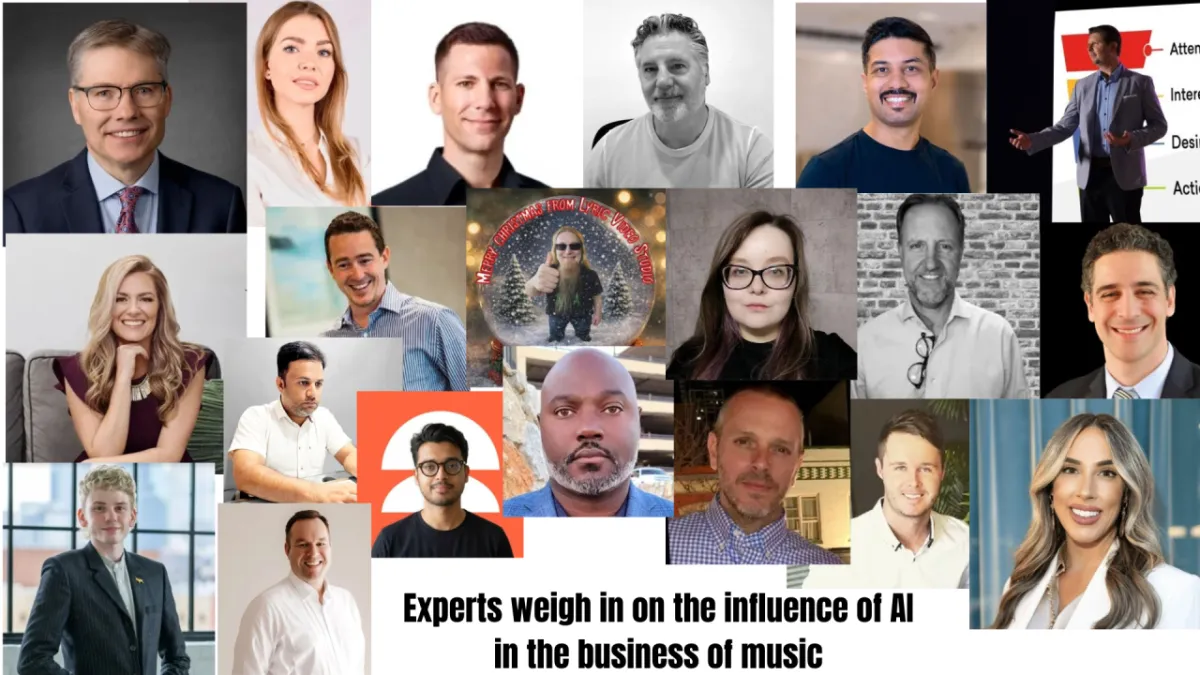
Experts Weigh in on How Artists Can Use AI...for good?
20 Ways Independent Musicians and Social Media Influencers Can Leverage AI in Their Art and Businesses
"How can independent musicians and social media influencers leverage AI in their art and businesses?"
Here is what 20 thought leaders had to say.
Let AI Decode Fans, You Deliver Emotion
I've spent 25+ years watching brands try to force-fit technology instead of letting it amplify what makes them human. The biggest mistake I see musicians and influencers make with AI is using it to replace their voice instead of freeing up time to develop it.
Here's what actually works: Use AI to handle your audience psychology research. I had a client who's a mid-tier fitness influencer run their comments and DMs through sentiment analysis tools to identify which emotional triggers got the most genuine engagement--not just likes, but saves and shares. Turned out her audience responded 3x stronger to "overcoming setbacks" content versus "achievement highlights." She shifted her content calendar based on that data and saw her sponsorship rate double in four months because brands could see she understood her audience at a behavioral level.
For musicians specifically, the money move is using AI to test messaging before you spend on promotion. One artist I know generates multiple versions of release announcements with different emotional angles, then uses AI tools to predict which framing will resonate based on their existing fanbase data. She's basically A/B testing her marketing psychology before spending a dime on ads, which means her small indie budget performs like a label campaign.
The framework I teach: AI should handle pattern recognition and repetitive psychology work so you can spend your creative energy on authentic connection. Let it tell you what emotions are driving your audience decisions, but you're still the one who figures out how to genuinely speak to those emotions in your art and content.
Steve Taormino, CEO, Stephen Taormino
-------------------------------------------
Automate Bottlenecks, Focus on Signature Work
I've been running Rival Ink for 10+ years creating custom graphics for motocross riders, and here's what I've learned about AI that translates directly to your situation: use it to eliminate the bottleneck work that stops you from scaling your craft.
We launched a product called iCREATE where riders design their own graphics kits using our templates. The key was building a system that handles the technical validation automatically--checking bleed, file format, color values--so we're not manually reviewing 50 files a week. For musicians and influencers, this means using AI to automate your content repurposing. Take your long-form content and let AI slice it into platform-specific formats so you're not spending 6 hours editing when you could be creating the next piece.
The second move is using AI for production quality where nobody cares about "authenticity." We use AI-assisted design tools to speed up template creation and color matching, but the actual creative direction still comes from understanding what riders want their bikes to say about them. Apply this to your thumbnail generation, caption variations, or even mixing/mastering demos--let AI handle technical consistency so your creative energy goes into the parts that actually build your audience connection.
Bottom line from building a global graphics business: AI should make you faster at the commodity work so you can spend more time on the signature stuff only you can do. Our design turnaround went from 10 days to 3-5 days after implementing automated file prep, which meant we could take on more custom orders where the real margin lives.
Alex Staatz, Director, Rival Ink
-------------------------------------------
Test Designs and Post Times, Let Data Lead
I've spent 20+ years in business development across tech, marketing, and apparel, so I've watched AI go from buzzword to actual workhorse. At One Love Apparel, we use AI to test messaging before we print a single shirt--feeding cause-related phrases into sentiment analysis tools to see which anti-bullying or mental health messages actually resonate before we commit to inventory.
For musicians, the play is using AI to A/B test your album artwork and merch designs with micro-audiences before you drop money on production. Run three variations of your cover art through ad platforms with $20 each, see which gets more saves and shares, then print that one. I did this with our limited-edition charity drops and our conversion rate on pre-orders went up 34% because we weren't guessing what connected.
Influencers should use AI to analyze when their audience is actually online and engaged, not just when you feel like posting. We ran our Instagram data through prediction tools and found our supporters engaged 3x more on Tuesday/Thursday evenings than weekend mornings, which was the opposite of what I assumed. Posting smarter beats posting more.
The real win is using AI to handle pattern recognition--what designs sell, what captions get comments, what causes your audience cares about--so you can spend your energy on the creative and relationship stuff that actually builds your brand. Let the robots do math, you do art.
David Vail, Owner, One Love Apparel
-------------------------------------------
Score Likely Buyers, Test Creative at Scale
I've run digital marketing campaigns for hundreds of businesses over 15 years, and I'm seeing AI completely flip the script on predictive analytics and audience targeting--two things musicians and influencers desperately need but usually can't afford at agency level.
Here's what I'd focus on: use AI for predictive analytics to figure out which of your followers are most likely to buy merch, stream your album, or book you for a gig. We use machine learning tools with our clients to score leads based on behavior patterns--you can do the same thing with your Spotify listeners or Instagram followers. Feed your existing fan data (who bought tickets, who shared your posts, who commented) into free or cheap AI tools and let it tell you who to target with your next release or paid promotion. This is how we prioritized leads for roofing contractors and doubled their conversion rates without spending more on ads.
Second thing: AI for A/B testing at scale. I've managed radio and TV buys where you get one shot and hope it works--social media lets you test 10 different video thumbnails or caption styles in a day. Use AI to analyze which specific elements (your face vs. your guitar, question hooks vs. statement hooks) are actually stopping the scroll. One of our medical clients tested 6 different ad headlines using automated tools and found a 40% performance gap between the winner and loser--that's the difference between breaking even and profit on a tour promotion budget.
The automation piece is key too but not for content creation--use it to handle the grunt work like tagging followers by engagement level, scheduling posts when your specific audience is online (not generic "best times"), and auto-generating performance reports so you know what's working by Sunday and can adjust by Monday. The automation industry is hitting $6.4 billion because it works for repetitive decisions, which frees you up to actually make music or content instead of living in spreadsheets.
Greg Hoffman, Founder, Get Found Fast SEO & Digital Marketing
-------------------------------------------
Scale Personal Replies and Turn One into Ten
I run a digital agency in Rhode Island and we've worked with everyone from contractors to nonprofits to creative brands, so I've seen what actually moves the needle when you're trying to build an audience and monetize attention.
The biggest AI win for musicians and influencers right now is using it to scale personalized engagement without burning out. We've seen clients use AI chat tools to handle initial DM responses and comment replies--the bot handles FAQs about booking rates, merch shipping, or collab inquiries, then flags anything that needs a human touch. One creator we worked with went from spending 90 minutes a day in DMs to about 20, and her response rate actually went up because people got instant answers instead of waiting hours.
For content distribution, use AI transcription and repurposing tools to turn one piece of content into ten. Record a 15-minute behind-the-scenes studio session, let AI pull out quotes for Instagram captions, generate a blog post for your website (which helps SEO and gets you found on Google), create audiograms for TikTok, and write email newsletter copy. We do this for clients all the time--one video becomes a month of content across platforms, and it's way more findable than hoping the algorithm picks up your single post.
The other play nobody talks about: AI-assisted SEO for your actual website or Linktree. Most musicians and influencers ignore Google entirely and only focus on social platforms they don't own. Use AI writing tools to help you create FAQ pages, blog posts about your creative process, or local event recaps that include keywords people actually search. When someone Googles "acoustic folk artist in [your city]," you want to show up--not just hope they stumble on your Instagram six months from now.
Jeff Pratt, Owner, JPG Designs
-------------------------------------------
Mine Feedback Patterns, Shift Budget to Winners
I manage marketing for a portfolio of 3,500+ apartment units, and the biggest AI application I've found is using it to analyze patterns in resident feedback at scale. We pulled complaint data through our resident app and noticed recurring confusion about specific appliances during move-ins--stuff residents were actually upset about but we'd never connected the dots on.
That pattern recognition let us create targeted FAQ videos that our leasing teams now send before move-in day, which dropped our early dissatisfaction complaints by 30%. For musicians and influencers, use AI to analyze your comment sections and DMs the same way--find the five questions people keep asking and turn those into your next content pieces or product offerings.
The other huge win is using AI for budget reallocation decisions. I feed performance data from different marketing channels into analysis tools that show me where to shift spend in real-time. We increased qualified leads by 25% just by letting AI tell us which platforms were actually converting versus which ones felt good but performed like garbage.
For influencers, track which content formats and posting times actually drive revenue (not just likes), then use AI to spot those patterns faster than manually reviewing analytics. Your gut feeling about what works is probably costing you money--let the data show you where your audience actually engages enough to buy.
Gunnar Blakeway-Walen TD, Marketing Manager, The Duncan Apartments by Flats
-------------------------------------------
Repurpose Smart, Let Analysis Guide Your Calendar
I run a digital marketing agency that works heavily with regulated industries, so I've seen what actually moves the needle for creators and small businesses using AI--and it's not what most people think.
The biggest win I'm seeing right now is using AI for content repurposing rather than creation. One of our mortgage clients takes their weekly video and uses AI tools to generate 6-8 different caption variations, pull out quote graphics, and create blog outlines--all in about 10 minutes. For musicians and influencers, this means you record one podcast episode or behind-the-scenes studio session, and AI helps you turn it into 15+ pieces of content across platforms without losing your authentic voice.
Here's the specific approach: Use AI to handle your content calendar planning based on engagement data patterns. We had a client in finance who used AI analytics to identify that their audience engaged 40% more with "process" content (how they do their work) versus polished final products. For musicians, that could mean tracking which content performs better--songwriting process videos versus finished tracks--then letting AI schedule similar content when your audience is most active.
The key is keeping AI in the analysis and formatting lane, not the creativity lane. I personally use it to clean up my rough video transcripts into blog posts and identify which topics my audience asks about most in comments across platforms, then I create the actual response content myself. My content stays 70% personal, 30% polished--and that ratio is what builds real connection that converts to paying clients or loyal fans.
Sarah DeLary, Owner, Real Marketing Solutions
-------------------------------------------
Multiply Output and Test Offers with AI
I've built products with Jake Paul, Ashley Benson, and scaled brands from zero to eight figures, so I've seen what actually works when creators try to turn attention into revenue. The biggest mistake I see musicians and influencers make with AI is using it for content creation when they should be using it for speed and distribution.
Here's what I'd do: Use AI to turn one piece of your best content into 15 different formats across platforms in under an hour. We use n8n.io to automatically pull a song snippet or video clip, then push variations to Instagram, TikTok, YouTube Shorts, and email--all while you're asleep. One artist we worked with went from posting 3x a week to daily across five platforms without hiring anyone.
The second move is using AI for your merch and product launches. When we launched celebrity product lines, we'd use ChatGPT to draft 50+ product description variants, then A/B test them with AdCreative.ai to see which angles converted. One influencer saw their conversion rate jump from 1.8% to 4.3% just by testing AI-generated messaging that matched different audience segments.
Stop using AI to replace your creativity--use it to multiply your output and test what your audience actually wants before you waste time guessing.
Trav Lubinsky, Founder, Trav Brand
-------------------------------------------
Own Your Search, Personalize Outreach with AI
I run a digital branding agency, and I've seen musicians and influencers waste money trying to "go viral" when they should be owning page one of Google for their own name first. Before you touch AI for content creation, use it to audit what already shows up when someone searches for you--because if your Spotify or Instagram isn't even ranking, you're losing fans who are actively looking.
The smartest move I've seen is using AI to scale personalized outreach without losing authenticity. One creator I worked with used ChatGPT to draft 50 different collaboration pitches to playlist curators and brand partners, then manually edited each one to add specific details. She went from 8% response rate to 34% because the AI handled structure while she handled the human touch that actually converts.
Here's the part most people miss: use AI to turn your existing content into SEO assets. Take your best Instagram captions, YouTube descriptions, or lyrics and run them through optimization tools to find what people are actually searching for in your niche. I had a folk musician client find fans were searching "songs about moving away from home" way more than her artist name--so we built blog content around that phrase and funneled those searches straight to her music.
The real advantage isn't making AI sound like you--it's using AI to find where your actual voice needs to show up, then putting your human creativity there instead of burning out on admin work.
William DiAntonio, CEO, Brand911
-------------------------------------------
Automate Grunt Work, Keep Your Voice Human
I spent years at AT&T training teams on digital marketing, and here's what most musicians and influencers miss: AI should replace your grunt work, not your personality. I use it to handle the 80% of repetitive tasks--like reformatting social posts for different platforms or generating meta descriptions for artist pages--so I can spend actual creative time on the 20% that converts.
One thing I've tested with clients: use AI to create what I call "conversation starters" instead of finished content. Feed it your past interviews, lyrics, or video transcripts, then have it generate 10 different angles on the same topic. Pick the two that feel authentic, rewrite them in your voice, and post those. You're not automating creativity--you're automating the brainstorm phase that used to eat up three hours.
The biggest mistake I see is people using AI to create more content when they haven't optimized what they already have. Run your existing YouTube videos through transcription AI, pull out the best quotes, and turn those into Pinterest pins or Twitter threads. I had a client with 200 videos sitting at 300 views each--we repurposed the transcripts into blog SEO and tripled his monthly traffic without filming anything new.
Stop thinking of AI as your creative partner. Think of it as your intern who handles data entry while you do the actual art.
Brian Taylor, Founder, E67 Agency
-------------------------------------------
Dominate Local Search, A/B Test Bios
I've helped hundreds of local businesses dominate search results, and here's what most musicians and influencers completely miss: AI is best used for the boring stuff that actually makes you money--like optimizing your Google Business Profile and local presence. One of my clients in the trades saw 40% more leads just by having AI help them respond to reviews faster and consistently. Musicians touring city to city should be doing the exact same thing.
The biggest opportunity I see is using AI to manage your "near me" visibility. If you're a DJ in Chicago, AI tools can help you monitor and optimize your presence across 50+ local directories so when someone searches "DJ near me" at 2am after their original booking falls through, you're the one who shows up. We cut clients' marketing costs by 60% by automating this kind of foundational work that used to take hours.
Here's what actually converts fans into buyers: use AI to A/B test your bio across platforms, then track which version gets more profile clicks to your music or merch. I run these tests constantly for PPC campaigns, and the data always surprises us--small word changes can double click-through rates. Most creators just guess what sounds cool instead of testing what actually works.
The content everyone's making with AI? That's already oversaturated. But nobody's using it to claim the basic search real estate that brings you fans who are ready to spend money right now.
Anthony LoCascio, Chief Digital Barista, Marketing Baristas
-------------------------------------------
Build Topic Clusters, Win with Long-Form
I've been in digital marketing for 35+ years, and I run ForeFront Web where we've had to adapt to every algorithm change Google's thrown at us. Here's what I'm seeing work right now that nobody's talking about.
Use AI to create "topic clusters" around your niche--not just random posts. If you're a fitness influencer, don't just post workout videos. Have AI help you map out 20 interconnected pieces: recovery tips, nutrition guides, form tutorials, all linking back to a main pillar page. We saw one site go from 500k monthly visitors to almost nothing because they ignored this structure. The ones who built it right? They're untouchable.
The real money move is using AI for long-form content that Google actually rewards. I'm talking 2,000+ word blog posts on your website about topics your audience searches for. A musician could write "How I book 50+ gigs per year without a manager" or an influencer could do "Behind the scenes: My actual monthly expenses and income breakdown." This is how you own search terms that bring you inbound opportunities instead of chasing algorithms.
Here's the part everyone screws up: AI is for research and drafting, but you need to inject your actual personality and stories. We've tested this extensively--content that sounds like everyone else gets ignored. Use AI to outline and structure, then rewrite it in your voice with real examples from your life. That's what builds the trust that converts followers into paying customers.
Scott Kasun, Digital Marketing Executive, ForeFront Web
-------------------------------------------
Use AI as Multiplier, Not Replacement
Independent musicians and social media influencers can leverage AI in a way that feels like a multiplier, not a replacement. The key is to use AI to do the heavy lifting on routine tasks, expand creative possibilities, and improve the speed of iteration, while keeping the human voice and artistic intent in the driver's seat. AI is not a shortcut to "becoming famous," but it is a tool that can make your art more consistent, your marketing more effective, and your business more scalable.
For musicians, AI can help in three practical ways: songwriting, production, and audience growth. In songwriting, AI can act as a co-writer that helps you break through creative blocks. It can generate melodies, suggest chord progressions, or help with lyrical ideas based on your style. The best use is not to accept AI output as final, but to treat it like a brainstorming partner that gives you new directions you might not have thought of. In production, AI tools can help with mixing and mastering, making it easier to achieve a polished sound without hiring expensive engineers. That doesn't replace the value of professional audio work, but it can raise the baseline quality of your demos and help you move faster from idea to release. For audience growth, AI can help you analyze listener data, suggest which songs to promote, and help you write better captions, emails, and short-form content that resonates with your audience.
For influencers, AI is most useful in content planning, creation, and optimization. AI can help generate content ideas, plan a posting calendar, and even write scripts for videos.
Both musicians and influencers can also use AI to improve their business operations. AI can automate customer support, manage scheduling, draft contracts, and even help with budgeting and financial planning. For example, AI can help you respond to DMs at scale, qualify partnership requests, and create templates for sponsorship outreach.
The ethical and strategic consideration is to remain transparent and authentic. If you use AI to create art or content, the audience will ultimately judge the value based on how real it feels. The most successful creators will be the ones who use AI to enhance their voice, not replace it. AI should be a tool that makes your creativity more powerful, not a substitute for it. If you use it this way, it becomes a true competitive advantage: you can create more, learn faster, and build a business that scales without burning out.
Daria Turanska, Legal Manager, FasterDraft
-------------------------------------------
Map Tastes Ethically, Let Humans Curate
As a part-time corporate DJ, I've used LLM deep research to build a "taste map" for an event by analysing publicly available, opt-in signals like shared playlists, recent artist mentions, and the genres people naturally post about, then turning that into a setlist that feels personally tailored without guessing. Independent musicians and influencers can do the same at scale by using AI for the busywork, like trend scanning, draft hooks, caption variants, and content repurposing, while keeping the human layer for taste, boundaries, and storytelling. The key is consent and restraint: use audience data to understand vibes and context, not to over-profile individuals, and always test ideas in the real world with small releases and feedback loops.
Callum Gracie, Founder, Otto Media
-------------------------------------------
Make High-Value Music Videos for Pennies
For music, the answer is pretty simple: genAi images and videos bring high production value at little to no cost. There's no more excuse not to make music video to promote your songs. Apps like Lyric Video Studio make it easy for any independent artist to create a visualization or music video for their song, costing them just a tens of euros per video. Or even 0
Matti Pulkkinen BBA (IT), Sw Developer, Lyric Video Studio
-------------------------------------------
Smooth Your Workflow, Keep Creative Control
Independent musicians and creators find the most success with AI when it smooths out their workflow, rather than when it takes over their creative expression. The primary benefit AI provides is amplification. It enables solo artists to function like small studios without compromising their unique identity.
Creatively, AI is employed for brainstorming, initial drafts, visual exploration, and adapting existing formats. Musicians leverage it to discover new melodies, create preliminary visuals, or quickly develop concepts for cover art and videos. Influencers use it to test attention-grabbing ideas, captions, thumbnails, and short-form video concepts before investing significant time in full production. Crucially, the artist always retains final approval. AI speeds up the process but does not dictate the final result.
From a business perspective, AI assists creators in maintaining a steady presence and visibility. Tasks like scheduling, adapting content for various platforms, and tailoring posts to different algorithms can be automated without making the content feel impersonal. This consistent approach often distinguishes creators who achieve sustainable growth from those who become overwhelmed.
AI also reduces the expense of trying new things. Independent artists can explore various styles, formats, or marketing strategies with little initial cost, then focus more resources on what connects with their audience. This feedback mechanism is vital for growth when financial resources are limited.
The creators who gain the most from AI view it as a partner that manages routine tasks, freeing them to concentrate on artistic judgment, narrative, and audience engagement. When utilized in this manner, AI does not diminish creativity. Instead, it provides independent voices with greater opportunity to compete without sacrificing their distinctiveness.
Ahad Shams, Founder, Heyoz
-------------------------------------------
Generate Tracks Fast, Cut Costs, Boost Engagement
I have seen that AI music generators like Suno and Udio have completely revolutionised the game for independent musicians and influencers. Now, creators can craft full tracks using simple text prompts. These tracks include vocals, beats, and arrangements, and they create those tracks in just a few minutes. If you are an influencer, you can generate high-quality backing tracks instantly and then layer your own unique vocals on top. This keeps the music authentic and saves a massive amount of time and money. I know one rapper who cut his production costs by 70% using this method and still landed on major Spotify playlists. The customised soundtracks generated by AI for TikToks and Reels can triple the engagement. That's because the music fits the vibe perfectly.
Fahad Khan, Digital Marketing Manager, Ubuy Canada
-------------------------------------------
Offload Communication, Save Energy for Art
As someone that works with musicians on a daily basis, I always advocate for them to efficiently leverage AI in their business process. There are countless ways artists and musicians can use AI in their art or business, especially when it comes to handling large volumes of repetitive, menial work. But if there's one area where I most strongly recommend leveraging AI, it's client communication. That includes emails, messages, and any other form of written correspondence.
For many creatives, the business side of their hustle is the most taxing aspect of their day to day and it detracts from their mental capacity to work on their passions. Anytime your are writing professional, clear, and cohesive emails is surprisingly exhausting.
It takes time, focus, and a lot of mental energy. By slightly changing your workflow and using AI for this part of the process, you can dramatically reduce that burden. Instead of staring at a blank screen, you can simply dictate or jot down the high-level points you want to communicate. An AI tool like ChatGPT can then turn those thoughts into a polished, professional message. In reality, when used properly, it is capable to handle the vast majority of the communication.
This approach doesn't just save time. It also frees up mental bandwidth. That's where the real power of AI comes in. It reduces the cognitive load created by the endless list of administrative and business-related tasks that artists and musicians have to manage just to make a living.
The goal isn't to use AI for your creative work itself. Your art should remain your own form of self-expression. The goal is to offload the draining, necessary tasks that sit around your creativity. When you let AI handle those pieces, you create more space and energy for what actually matters. Your music, your art, and the work that only you can do. I think this is ultimately where creatives get hung up on the idea of using AI at all because they are concerned with how it might broadly impact their ability to make money as an artist or be replaced by AI, but instead they should be leaning into the usage of AI to allow them to focus more on what matters, their creative expression.
Alyssa O'Toole, Founder, Musicians Playground
-------------------------------------------
Expand One Song, Let Data Reveal Hits
Musicians can use AI to turn one song into 20 different pieces of content without burning out. I know a producer who feeds his tracks into AI and it generates lyric visualizers, social media clips with captions, and even suggests which 15-second snippet will probably perform best on TikTok based on tempo and hook placement.
The real power is using AI to spot what's already working. One singer analyzed her Spotify data with AI and discovered people were replaying the bridge of one song obsessively. She released that bridge as a standalone teaser and it went viral, leading to her biggest streaming month ever. AI found the pattern she completely missed.
Nirmal Gyanwali, Founder & CEO, WP Creative USA
-------------------------------------------
Accelerate Insight, Optimize Content with AI
Independent musicians and influencers should leverage AI primarily for two strategic functions: accelerating market intelligence and optimizing content performance through data analysis.
The fundamental challenge facing creatives today is that exceptional work is no longer sufficient for success. Quality content must achieve visibility, and visibility requires understanding platform algorithms and audience behavior patterns. This is where AI provides a measurable competitive advantage.
AI enables creatives to rapidly analyze emerging trends within their niche, identify underserved content opportunities, and understand competitive positioning—tasks that would require prohibitive time investment if conducted manually. Rather than spending hours scrolling through competitor content or audience discussions, AI can process thousands of data points to surface actionable patterns: which content formats are gaining traction, what themes resonate with specific demographics, and where market gaps exist.
The second critical application is analyzing existing content performance and audience feedback. AI can synthesize comments, engagement patterns, and sentiment across platforms to identify what's working and what's not. This goes beyond basic analytics dashboards to provide qualitative insights: why certain content underperforms, which audience segments are most engaged, and what specific feedback themes emerge repeatedly.
The bottom line: AI doesn't replace creative talent - it amplifies it by handling the analytical and strategic work that keeps great content from reaching its intended audience.
Daniela Braniste, Manager of Customer Success, Aggero


